

Are DJs...Doms? What post-set sadness and BDSM have in common
Check on your musician friends when the lights come on.

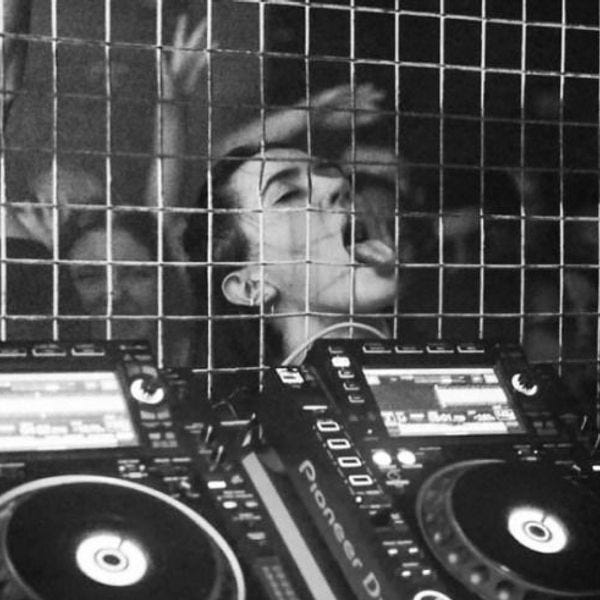
The lights had just come up at Othership in New York after a long night of tribal head banging in the new age (but ancient-feeling) wellness space. Between sauna sweats and bonding cold-plunges, we were treated to brain melting beats in the tea room turned dance floor.
As the crowd continued its shimmering, sweaty undulations, I spotted my friend, the DJ who had just played, sitting on the waterproof cushions with a forlorn look in his eyes. That distant gaze of being neither here nor there, even as admirers brushed by to congratulate him on a killer set that catapulted us all to the cosmos as if the world was about to end.
I walked over, my movements slow, deliberate, the way you move after any intense experience.
"Hey," I said softly, laying a hand on his back, just below his neck, where the tension seemed to have gathered into a knot.
He barely stirred.
"You really took us somewhere," I continued. "From the first beat, you had us. I forgot where I was for a while there. That’s a gift, you know."
He finally looked up, his eyes a little unfocused, like he was still seeing the kaleidoscope of humans on a dance floor.
"It’s a lot, though," he admitted, almost to himself. "All that energy... then it just stops."
"It does," I said. "And what's left behind can feel…hollow in your chest." I squeezed his shoulder gently. "You're still here, though. All of you."
I then moved to sit behind him and wrapped my arms around him. I let him lean back into me. I was sturdy. His weight collapsed, eventually, as I began gently tapping on his chest, right above his heart.
“Breathe,” I whispered in his ear. “Focus on nothing else but my hand beating your chest, along with your heartbeat.”
One tap.
Another.
Another.
”You are here,” I said. “Come back to your body.”
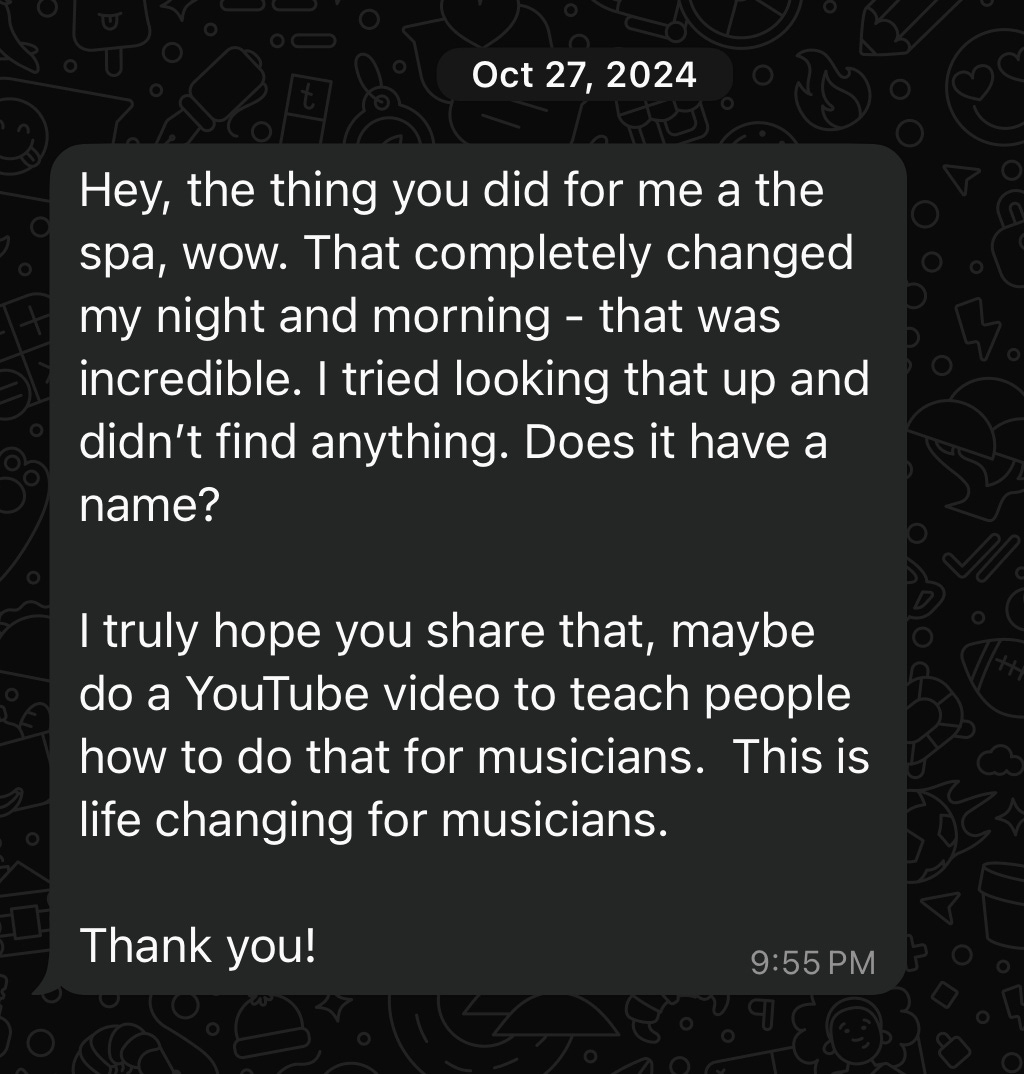
DJs are not unlike Doms: The crucial aftercare for those who command the room
The world spins, and sometimes, you find yourself in the eye of the storm, wielding a kind of power that bends reality. For centuries, we’ve called these figures many things: leaders, shamans, even kings. Today, in spaces you might not expect, like the throbbing heart of a dance floor or the hushed intimacy of a consensual scene, we find two distinct but eerily similar architects of experience: the DJ and the Dominant.
At first glance, one might scratch their head. What in the hell does dropping beats have to do with BDSM?
A lot, it turns out.
Both roles are about intentional authority, about guiding others through a crafted reality. A DJ isn't just playing tracks; they're sculpting a sonic journey, moving bodies, lifting spirits, creating a collective euphoria.
A Dom isn't just giving commands; they're orchestrating a deeply personal, consensual dance of surrender and control.
They both take you somewhere, far from the ordinary.
And when you bring someone to the edge of the known, when you hold that much space and control, there's a reckoning. A comedown. What the BDSM community calls "Top Drop" or "Domdrop" (that sudden, disorienting descent from the peak of power and heightened sensation) finds its echo in the DJ’s post-performance haze.
It's the moment the architect of worlds finds themselves back in their own living room, or amongst the crowd they just served, with the echoes of their creation fading and reality coming in reaaaaaal hard and fast.
It can be disorienting.
Why the high has a cost
Imagine this: during an intense BDSM scene, a Dominant's body floods with a complex cocktail of neurochemicals. There's the adrenaline for that heightened arousal, the rush of being in command. Endorphins kick in, modulating pain and pleasure, creating a powerful natural high. Serotonin, the mood elevator, surges, as does dopamine, the reward chemical, reinforcing the intense focus and fulfillment of the role. This creates a powerful altered state, a "natural high."
Then, the scene ends.
The chemicals rapidly dissipate.
The body, in its attempt to return to normal, experiences a temporary underproduction of these crucial neurochemicals.
This is why Dominants can feel depression, a strange lethargy, an unsettling emptiness.
Guilt can creep in, a tiny, insidious voice asking if they're "good" or "bad" for exploring those deeper desires.
They feel exposed, raw. It's a neurochemical hangover, a "sugar crash" for the brain, sometimes even likened to the "Suicide Tuesday" experienced by XTC users. Beyond the chemical imbalance, the body is also recovering and healing from the physical and emotional intensity.
Now, consider the DJ.
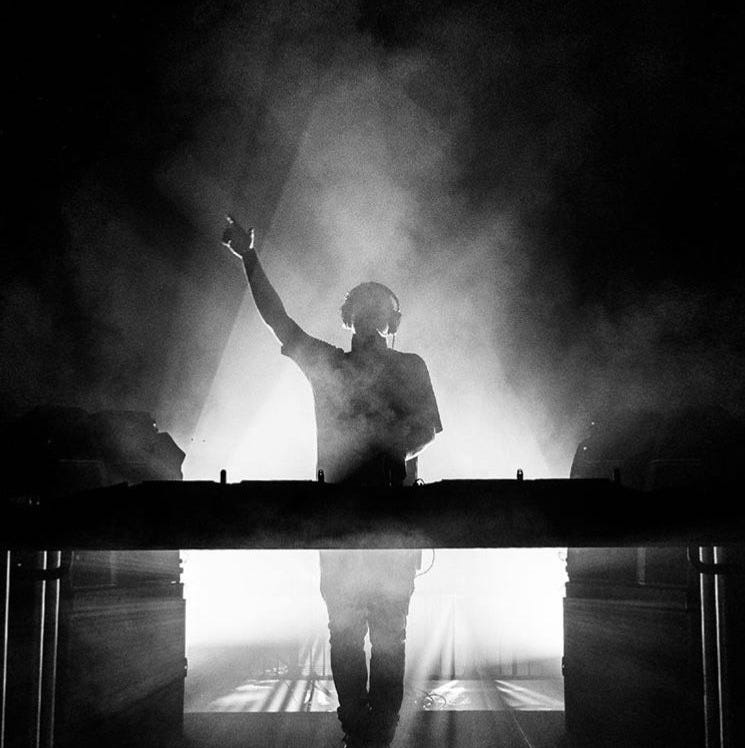
They stand before a sea of awe-adorned faces, guiding frequencies through sound, feeling the palpable energy of the crowd surge and recede with every mix. There’s an intoxicating sense of omnipotence, fueled by their own internal neurochemical symphony. They're in a flow state, intensely present, influencing hundreds, even thousands, of inner worlds. The validation is immediate, overwhelming. It’s a powerful high.
But then, the last track fades.
The lights come up.
The crowd disperses. Or continues on in their frenzy, guided by the next DJ in line.
That rapid shift from collective energy and external validation to solitude can be jarring.
DJs can experience their own version of Domdrop: anxiety, a deep fatigue, even a lingering sense of disconnection, like they're still "stuck in their head."
The "godlike" feeling, if left unchecked, can morph into an unhealthy complex, making it hard to land back in humble reality. All to say, reality is never, ever as good as the high.
This on-stage persona, even when exhilarating, is draining. It creates a temporary separation from the regular self. The more profoundly immersed, the greater the expenditure. And a larger debt means a more severe drop.
The non-negotiable art of aftercare
This is where aftercare, a concept as crucial as the peak experience itself, comes in.
For the Dom, aftercare is about grounding and reassurance. It's hearing from the submissive, "That was amazing. You're still a good person. I wanted that. I needed that!"
This verbal affirmation is crucial for mitigating any lingering guilt. It's non-sexual touch, like cuddles, shared silence, the simple act of eating a snack together. It’s about re-establishing normalcy, dispelling any lingering guilt, and strengthening trust within the dynamic.
For the DJ, aftercare is about re-centring and sustainability. It's emotional regulation. It’s grounding touch after an activating experience of exertion. It’s collecting all the pieces of themselves they gave to create the experience for others, and remembering their own wholeness.
Completing the cycle
Neglecting aftercare carries real risks: chronic sadness, anxiety, a sense of being perpetually "disconnected."
For the DJ, this can manifest as burnout, a significant loss of motivation, turning a passion into a chore. No longer feeling satisfied with their human-self. Giving-giving-giving, but never practicing receiving. That’s not to say that they don’t receive while they’re playing, but there is a difference between the reverence of a crowd in response to your giving, and the simple act of being seen as human and loved there with nothing left to offer.
For the Dom, it can lead to persistent guilt, shame, and erode trust within the dynamic.
But with intentional aftercare, the opposite happens.
It's a safe space for emotional release, a vital recovery process that calms the nervous system and re-regulates the body and mind.
The ability to return to reality, grounded and whole, after creating or facilitating extraordinary, altered experiences, is the mark of true self-mastery.
But it’s hard to do alone.
So, to all the DJs out there: Have you ever felt that crash after a killer set? Have you experienced your own kind of "Top Drop"?
And to all you Dom(mes): Based on what you know (and/or need) for aftercare, what tips do you have for how friends of the DJ can lovingly bring them back to reality?
Let DJs and Doms unite to close loops!
Yeah girl! Love this.